Quick answer
If you pump or bottle-feed several times a day, a bottle washer can remove the most repetitive part of your routine. Australian health guidance recommends washing bottles and teats after every use and sterilising feeding equipment until your baby is 12 months old, so the washing-up never really stops — it just moves to the sink at 2am (Pregnancy, Birth and Baby). The awkward parts are never the bottles themselves; they are the flanges, valves, collars and teat holes that a sponge cannot reach.
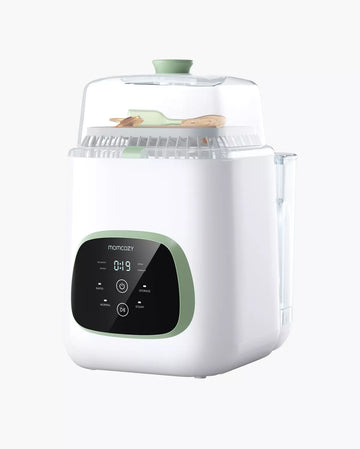
A benchtop washer that washes, steam-sterilises and dries bottles and pump parts in one cycle means you load everything after a session and walk away. It costs money and it takes up bench space. If you have a dishwasher, only use a handful of bottles a day, or are mostly breastfeeding a healthy full-term baby, you may not need one at all. The honest answer for most Australian parents is: it is a time purchase, not a hygiene necessity. The model this guide uses as its reference point is the Momcozy KleanPal Pro baby bottle washer and steriliser — wash, steam sterilise, dry and hygienic storage in one cabinet — and every comparison below is measured against it rather than described in the abstract.
 Member price
From$549.99Code Save 25%
 Member price
$589.00
$619.00Code Save 25%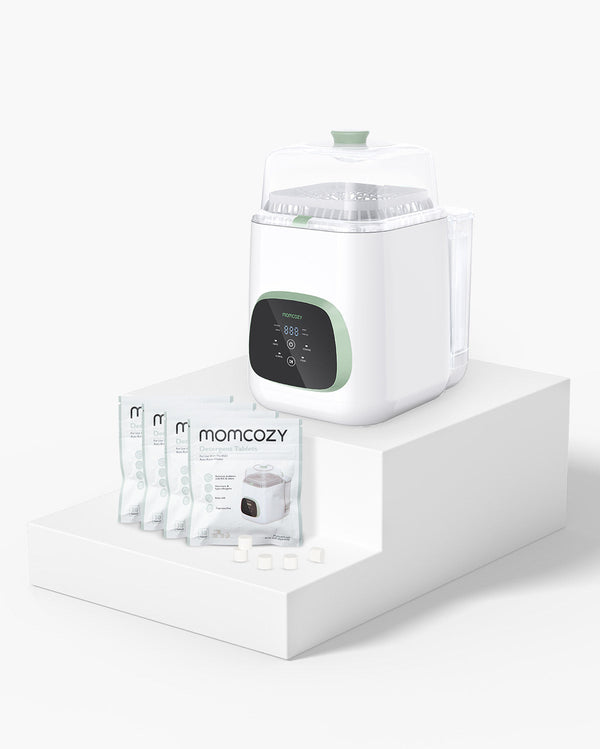 Member price
$552.99Code Save 20%

Read on for how these machines actually work, how they compare with a dishwasher and with a bottle steriliser, and what to check before you spend several hundred dollars on one.
What is a bottle washer?
A bottle washer is a dedicated benchtop appliance that washes, sterilises and usually dries baby feeding items — bottles, teats, collars, caps, dummies and breast pump parts. Instead of a bottle brush and a drying rack, you load a basket, add water (and often a cleaning tablet), and the machine runs a set cycle.
Two things separate a bottle washer from a bottle steriliser, and the difference matters when you are comparing prices:
- A steriliser only sterilises. Feeding items must be washed clean first, because sterilising does not remove milk film or residue (Pregnancy, Birth and Baby).
- A washer cleans, then sterilises, then dries. Some models, like the Momcozy KleanPal Pro baby bottle washer and steriliser, also hold the load in hygienic storage afterwards, so bottles are ready for the next feed rather than sitting wet on the rack.
 Member priceFrom$549.99Code Save 25%
 Member price$589.00
$619.00Code Save 25% Member price$552.99Code Save 20%

That "wash first, sterilise second" order is the reason a steriliser alone rarely solves a pumping parent's routine. It still leaves you scrubbing flanges in the sink.
Momcozy KleanPal Pro at a glance
Before the comparisons, here is the reference model in one place, so you can see how its specs line up against your own routine. The KleanPal Pro is a benchtop washer, steam steriliser and dryer in a single cabinet, sold in Australia for A$549.99 with a 1-year warranty.
- One cycle, three jobs. Wash, steam sterilise and dry run in sequence, with 9 cleaning modes for bottles, pump parts and dummies.
- Cleaning power. 26 multi-angle jets at 22,000Pa with a triple-layer spray wash, aimed at valve openings and flange crevices rather than just the base of the bottle.
- Capacity. Up to 4 bottles plus parts per cycle — a realistic load for a newborn plus one or two pumping sessions.
- Water and drainage. 2.5L per cycle, draining through a direct hose, so there is no waste tank to empty or clean.
- Hygienic storage. Holds the load for 72 hours after the cycle finishes, which is the part that matters at 2am.
- Maintenance. Descaling every 20 cycles, plus cleaning tablets as a consumable.
Full specifications sit on the Momcozy KleanPal Pro product page; the sections below explain what each of those numbers means in daily use.
How a bottle washer works
Every cycle does the same job in a different order to hand washing, which is why the time saving is real rather than marketing.
- Loading. Bottles, teats and small components are stacked on racks, and the small parts — valves, membranes, flange inserts — sit in a tray or basket so they do not fly around the cabinet mid-cycle.
- Washing. High-pressure water jets spray from multiple angles to shift milk residue and formula from inside narrow bottles and around valve openings. The KleanPal Pro uses 26 multi-angle jets and 22,000Pa of pressure, with a triple-layer spray wash.
- Sterilising. Most machines use steam. In Australia the standard advice is to sterilise feeding equipment until your baby is 12 months old, and to re-sterilise bottles that were sterilised but not used within 24 hours (Pregnancy, Birth and Baby). Always follow your device's instructions and your child health nurse's advice for premature or unwell babies.
- Cycle options. Quick cycles suit lightly used bottles between feeds; intensive cycles suit a full day's load. The KleanPal Pro offers 9 cleaning modes, and it holds up to 4 bottles plus parts in one cycle.
- Drying. Warm air drying removes the moisture that lets bacteria and mould grow in teat vents and bottle threads, and means bottles go straight back into the cupboard rather than onto a drying rack.
Can you wash baby bottles in a dishwasher?
Yes — as long as the bottles and parts are labelled dishwasher safe. Put bottles on the top rack, clip teats, valves and collars into a closed basket so they do not drop to the bottom, and run a hot cycle with a drying stage, as CHOICE's bottle-feeding guide also notes (CHOICE).
What a dishwasher does not do is sterilise to the standard Australian guidance expects for babies under 12 months, and it does not keep pump parts away from greasy plates and roasting trays. If your dishwasher is usually full of dinner dishes, or you are losing flange inserts down the bottom of it, a dedicated washer is the more practical second appliance.
Bottle washer vs dishwasher: key differences
1. Cleaning precision
- Bottle washer: built around bottles, teats and pump parts. Jets are positioned for narrow openings and the internal nooks of flanges and valves.
- Dishwasher: designed for plates and pans. Spray arms reach the open surfaces of a load, not the inside of a 150mL bottle neck or a valve membrane.
2. Sterilisation
- Bottle washer: built-in steam sterilisation as part of the same cycle, so cleaning and sterilising are not two separate jobs.
- Dishwasher: sterilises only if it has a dedicated high-temperature or sanitise setting, and even then small parts may not be reliably exposed to it.
3. Speed and convenience
- Bottle washer: shorter cycles, designed for small loads several times a day — which is exactly the pattern of newborn and pumping life.
- Dishwasher: efficient for a full day of dishes, but you are waiting for the whole load before the bottles come out.
4. Space and setup
- Bottle washer: sits on the bench, needs a power point and a drainage path. The KleanPal Pro drains through a direct hose — there is no waste water tank to empty or clean.
- Dishwasher: plumbed in, fixed location, and usually already full of family dishes by evening.
5. Daily use
- Bottle washer: suits parents cleaning bottles and pump parts three or more times a day.
- Dishwasher: suits families washing bottles alongside everything else, once a day, in quantity.
Bottle washer vs steriliser: what's the difference?
This is the comparison most Australian parents actually search for, because "steriliser" is the term used in Australian feeding guidance and in most nursery aisles. The distinction is simple:
- A steriliser kills germs on items that are already clean. Steam sterilisers, microwave sterilisers and chemical (cold water) methods are the three methods Australian guidance names, and all three follow washing (Pregnancy, Birth and Baby).
- A bottle washer does the washing that has to happen before sterilising, then sterilises and dries in the same cycle.
One Australian detail worth knowing before you buy: UV sterilisers are sold here, but there are no national guidelines for their safe use, which is why Australian health guidance still lists boiling, steam and chemical sterilisation as the three recognised methods (Pregnancy, Birth and Baby). If you want a method that matches published guidance, steam is the safe default.
So: if you already hand-wash well and only want sterilising, a steriliser and dryer is enough. If the washing is the part you dread, a washer-and-steriliser is the appliance that removes the step you actually hate.
Pros and cons of using a bottle washer
Pros
- Saves time. Washing, sterilising and drying run in one cycle, so the daily routine is loading and unloading rather than scrubbing.
- Better on small parts. Flanges, valves, collars and teat holes get direct spray rather than a brush that cannot fit.
- Consistent sterilising. Steam sterilisation is built into the cycle, so it happens even on the nights you would have skipped it.
- Useful at high frequency. Designed for parents feeding or pumping two or three times a day or more.
- Less human error. A set cycle does the same job every time, unlike hand washing at 3am.
Cons
- Bench space. It is a permanent appliance on the kitchen bench, not something you put away in a cupboard.
- Maintenance. Cleaning tablets and periodic descaling are ongoing costs and ongoing tasks — Momcozy recommends descaling the KleanPal Pro every 20 cycles.
- Limited capacity. Most machines take around 3–4 bottles plus parts per cycle, so a big family may still run two loads a day.
- Not always necessary. Households with few bottles and a good dishwasher can genuinely skip it.
- Upfront cost. Expect several hundred dollars — the KleanPal Pro is A$549.99 in Australia.
Pros and cons of using a dishwasher
Pros
- Multi-purpose. Bottles go in with the rest of the day's dishes.
- No extra appliance. If you already own a dishwasher, the marginal cost is zero.
- Effective on milk residue. Hot water cycles and good detergent handle most of it.
- Hands-free. Load it, run it, walk away.
Cons
- Mixing with greasy dishes. Many parents would rather not wash feeding equipment alongside roasting trays.
- Longer cycles. A full dishwasher cycle is far slower than a bottle washer's quick cycle, which matters between feeds.
- Small parts risk. Valves, membranes and flange inserts move, flip and fall through the rack.
- Setting-dependent. You need a hot or sanitise setting and a drying stage to feel confident, and not every Australian rental kitchen has one.
What to check before buying a baby bottle washer
- Cleaning power. Look for multi-angle jets and enough pressure to reach valve openings, not just the bottle base.
- Sterilisation method. Steam that runs inside the same cycle is the practical option in Australia; confirm the machine sterilises rather than only washes, and check the manual for the cycle temperature.
- Drying. Warm-air drying is what stops moisture pooling in teat vents and bottle threads. A washer that leaves everything wet just moves the drying rack problem.
- Cycle options. At least one quick cycle for lightly used bottles and one intensive cycle for a full day's load. Nine modes, as on the KleanPal Pro, covers bottles, pump parts and dummies separately.
- Capacity. Count how many bottles and pump parts you clean in a day. Four bottles per cycle is a realistic figure for a newborn plus a pumping session or two.
- Bench space and water. Measure your bench first. The KleanPal Pro uses 2.5L of water per cycle and drains through a direct hose, so you need a spot near the sink rather than a waste tank to empty.
- Running costs. Cleaning tablets, descaling tablets and electricity. Ask how often descaling is needed — for the KleanPal Pro it is every 20 cycles.
- Warranty and your rights. Momcozy includes a 1-year warranty on the KleanPal Pro, and purchases in Australia also carry the consumer guarantees that apply under Australian Consumer Law regardless of any manufacturer warranty (ACCC).
How to compare different bottle washers
- Match it to your actual routine. Capacity, drying, pump-part compatibility and cycle length should match the number of items you clean at once, not the number you clean on your best day.
- Check the local market. Minbie, Baby Brezza, eufy and Grownsy all sell bottle washers in Australia, and availability of replacement baskets, tablets and spare parts varies by brand — a cheap machine with no local parts support is expensive in month six.
- Look at real-world reviews from Australian buyers. ProductReview.com.au listings for the Momcozy KleanPal Pro, Minbie and Baby Brezza models show what breaks, what is noisy and what customer service is like here rather than overseas.
- Weigh support over feature lists. Clear instructions, a local warranty path and a support email that answers are worth more than one extra mode.
- Budget for consumables. Tablets and descaling solution are a recurring cost across every brand.
Best bottle washer for pump parts
If you pump regularly, the hardest items to clean are not bottles — they are pump parts. Flanges, valves, membranes and narrow-neck collection cups trap milk residue in places a brush cannot reach, and at 6–8 pumping sessions a day the hand-scrubbing adds up to real time.
Australian guidance is helpful here and less demanding than most parents assume. If your baby is healthy and born full term, you do not need to sterilise your own expressing equipment — you need to clean it thoroughly at least once every 24 hours, and if you express several times a day you can store the unrinsed parts in a closed container in the fridge between sessions (Australian Breastfeeding Association).
That said, "clean thoroughly once a day" is the step people skip when they are exhausted, and a fridge full of unrinsed flanges is not a long-term plan. A washer built for accessories solves it by holding the small parts in a basket while jets rinse every crevice, then sterilising and drying them. The KleanPal Pro is designed to take bottles, teats and pump accessories in the same load, up to 4 bottles plus parts. For a step-by-step routine, see our guide to how to sterilise breast pump parts.
An honest note: a benchtop washer still takes bench space and still needs descaling. But if pump-part cleaning is the bottleneck in your day, it is usually the first appliance worth buying.
Best bottle washer for newborns
Newborn feeding works differently from older-baby feeding. You may use fewer bottles, but you wash them constantly — sometimes every two to three hours around the clock — and Australian guidance asks you to sterilise until 12 months, with re-sterilising if a sterilised bottle sits unused for 24 hours (Pregnancy, Birth and Baby).
That rhythm makes a washer less about volume and more about consistency: clean, dry bottles ready for the next feed without a sink full of teats at 2am. What matters for a newborn is a quick cycle for lightly used bottles, a steam sterilise option, and reliable drying so moisture does not sit in teat vents.
The KleanPal Pro runs wash, sterilise, dry and 72-hour hygienic storage in one cycle, which is the useful part when you are juggling night feeds. If you want the cleaning basics first, our guide to how to clean a bottle steriliser covers what needs descaling and how often. And once bottles are clean, see our [AU-LINK: guide to the best bottle warmer for breastmilk] for the warming side of the routine.
Who should consider a bottle washer?
1. Frequent bottle feeders
If you are washing bottles three or more times a day, a washer removes most of the repetitive handling.
2. Busy or sleep-deprived parents
Rinsing between feeds is the task that grinds people down. Loading a basket takes a minute; scrubbing takes ten.
3. Parents with multiples
Twins and triplets multiply the bottle count, not the number of hands. Capacity per cycle matters more than any other feature here.
4. Pumping parents
Flanges, valves and collection cups are the hardest items to clean and the easiest to leave in the sink. This is the strongest case for a washer.
5. Households without a usable dishwasher
If you have no dishwasher, or one without a hot or sanitise setting, a washer gives you a consistent clean-and-sterilise cycle without a saucepan of boiling water on the stove.
Who might not need a bottle washer?
You only use a few bottles a day
One or two bottles a day is manageable by hand or in the dishwasher, and the machine will sit idle.
You don't mind hand washing
Hand washing with hot soapy water, a dedicated bottle brush and a good rinse is effective. Guidance only asks that you then sterilise.
You're minimising baby gear
Every benchtop appliance costs space. If you are deliberately keeping the kitchen clear, a steriliser and dryer or a saucepan of boiling water does the sterilising job.
Your baby is older and using fewer bottles
Once bottle feeds drop and cups take over, the daily load shrinks and hand washing becomes quicker than loading a machine.
FAQs
Do I really need a bottle washer in Australia?
No — it is a convenience appliance, not a hygiene requirement. Australian guidance asks you to wash feeding equipment after every use and sterilise until 12 months, and hand washing plus a steriliser meets that. A washer is worth it when you are cleaning bottles and pump parts several times a day and the task is eating your time.
Is a bottle washer better than hand washing?
Not better at cleaning, but more consistent and much faster on small parts. Hand washing works when you have the energy to do it properly every time — which is exactly what is in short supply in the first three months.
Can you put baby bottles in the dishwasher in Australia?
Yes, if the bottles and parts are dishwasher safe. Use the top rack, put teats and valves in a closed basket, and run a hot cycle with drying. A dishwasher does not replace sterilising for a baby under 12 months.
How often should you sterilise bottles?
Australian guidance recommends sterilising until your baby is 12 months old, and re-sterilising bottles that were sterilised but not used within 24 hours. For premature babies or babies who have been unwell, follow your child health nurse or doctor's advice.
Is a bottle washer the same as a steriliser?
No. A steriliser only sterilises items that are already clean. A bottle washer washes, sterilises and dries in one cycle, which is why it costs more and takes more bench space.
Do you need to sterilise breast pump parts?
If your baby is healthy and born full term, Australian guidance says you do not need to sterilise your own expressing equipment — clean it thoroughly at least once every 24 hours, and you can keep unrinsed parts in a closed container in the fridge between sessions. Clean and sterilise if your baby is premature or unwell, or if you have mastitis or another breast infection, on your health professional's advice.
Are UV sterilisers recommended in Australia?
UV sterilisers are sold here, but there are no national guidelines for their safe use, so Australian health guidance still lists boiling, steam and chemical sterilisation as the three recognised methods. Steam is the well-documented option.
Conclusion
Not every household needs a bottle washer, and anyone who tells you otherwise is selling one. But if you bottle-feed frequently, pump around the clock, or are washing for a newborn every couple of hours, a washer removes the single most repetitive task in the day — and, just as usefully, it lets a partner or grandparent take over the cleaning without being taught how to scrub a flange.
If your current routine feels manageable, hand washing plus a steriliser is genuinely fine, and it is what Australian guidance describes. If the sink is the thing making you dread the next feed, a machine like the Momcozy KleanPal Pro baby bottle washer and steriliser — wash, steam sterilise, dry and 72-hour hygienic storage in one cycle, up to 4 bottles plus parts — is the upgrade that pays back first.
Member price
From$549.99Code Save 25%
Member price
$589.00
$619.00Code Save 25%
Member price
$552.99Code Save 20%
*This article is general information for Australian parents and is not medical advice. Follow the advice of your child health nurse, GP or paediatrician for your baby's individual needs, and always follow the manufacturer's instructions for your feeding equipment.*