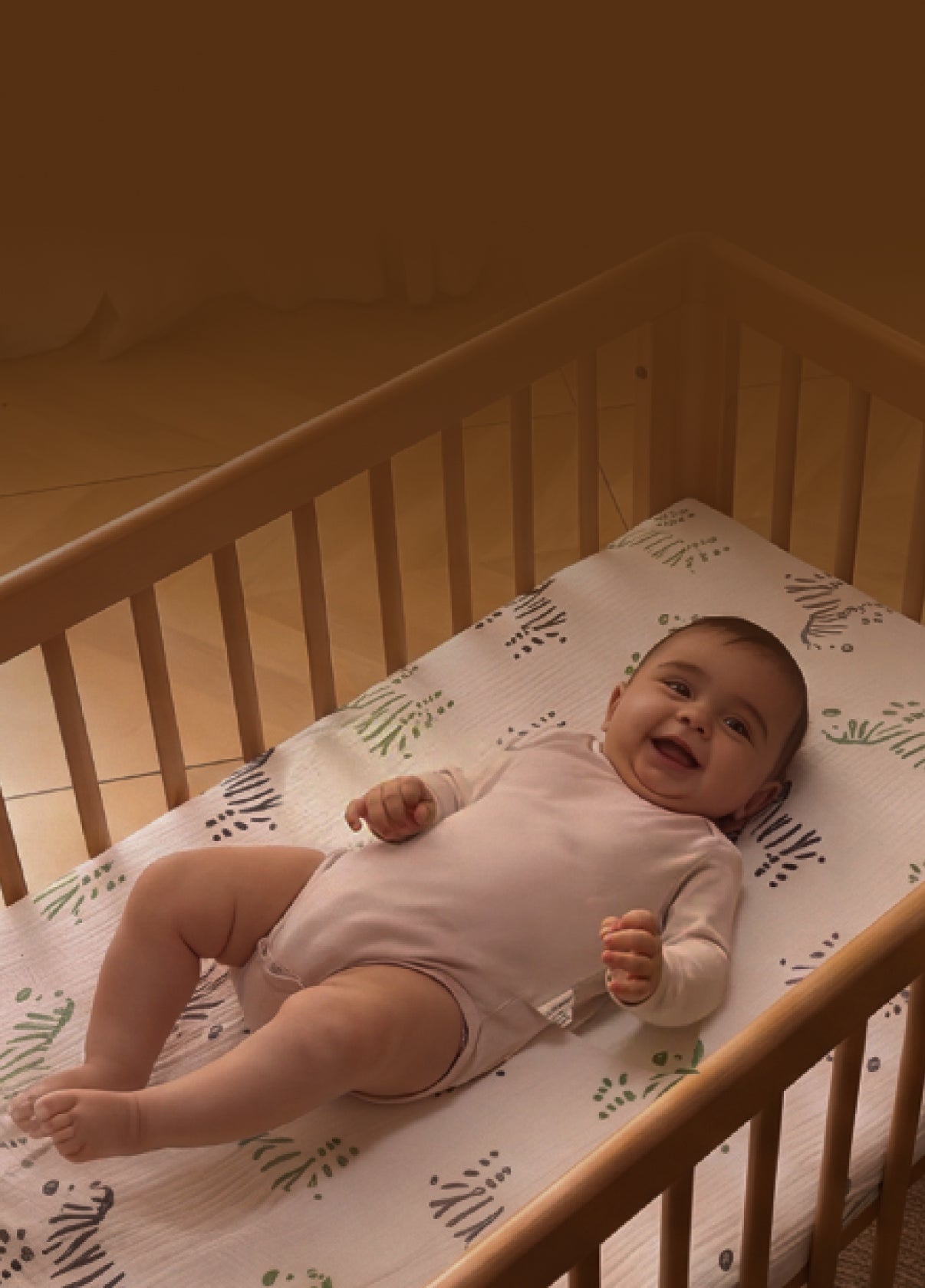

Feature Article
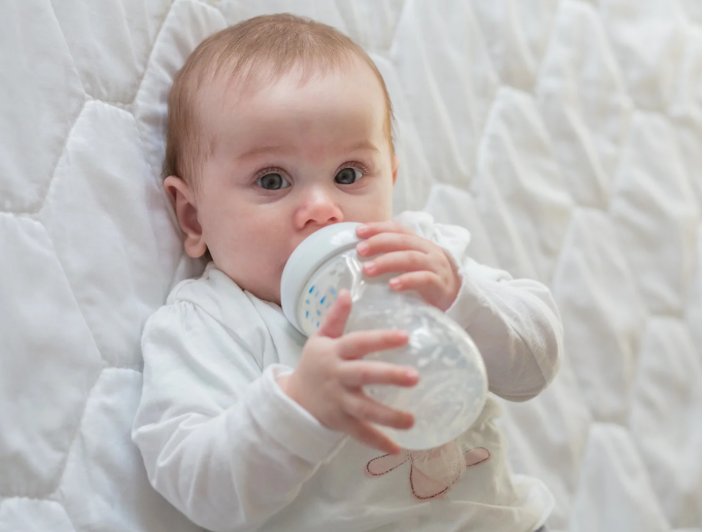
How to Clean a Baby Bottle Steriliser: The Ultimate Aussie Mum’s Guide
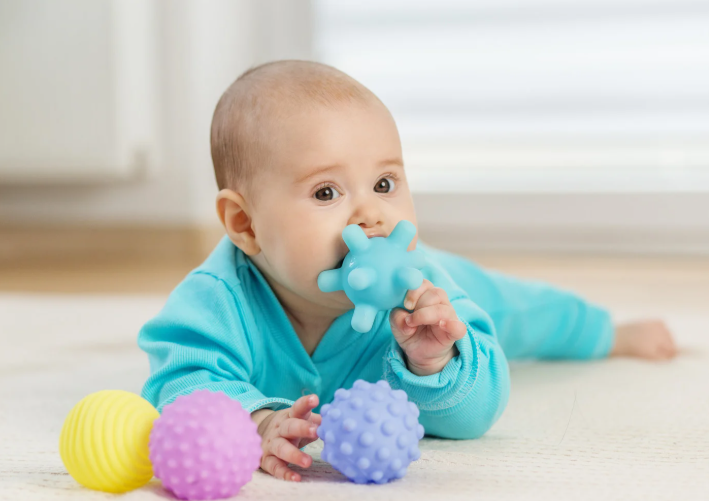
A Guide to 2-Month Baby Immunisation Side Effects: An Aussie Mum’s Perspective

Why Do Babies Throw Their Legs Up and Down in Sleep? An Aussie Parent’s Guide
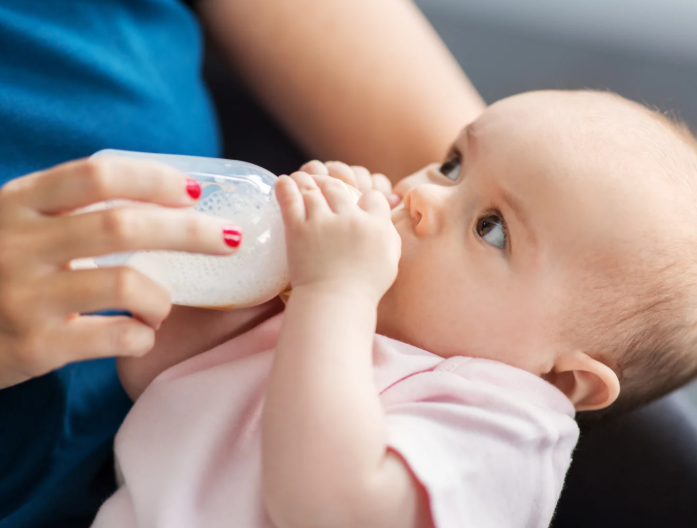
Why Is My Baby Squirming While Breastfeeding? An Aussie Mum’s Guide to Settling Your Bub
Latest Article
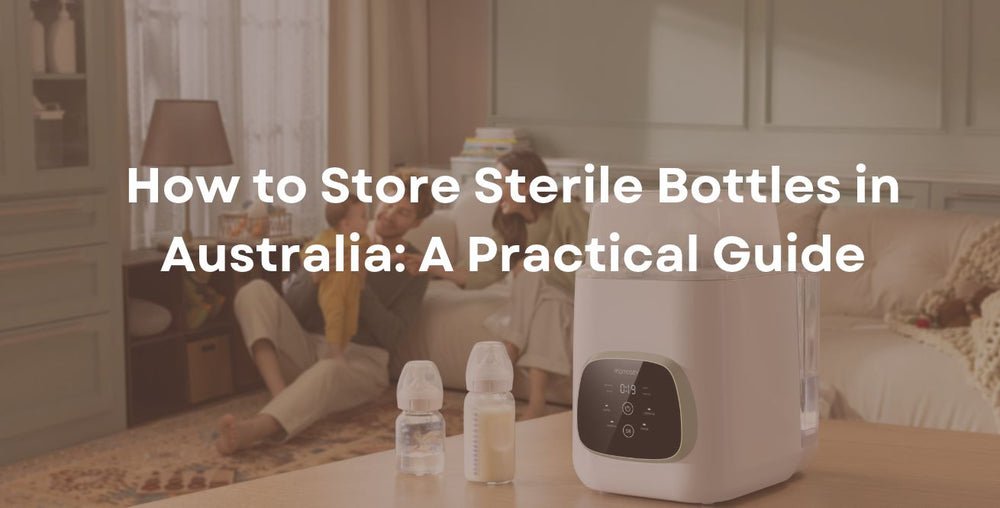
How to Store Sterile Bottles in Australia: A Practical Guide
Storing sterile bottles is the step most parents rush, and it is the step that undoes the wash. In Australia the working rule is simple: a bottle counts as ready for 24 hours, then it goes back through a cycle. Where it sits in between matters more here than in a cold climate, because a kitchen bench in February is neither clean nor cool. This guide covers the official 24-hour advice, fridge limits, summer heat, childcare drop-off and the small drying habits that decide whether a whole cycle holds or not. The Momcozy KleanPal Pro is the reference machine throughout this guide.
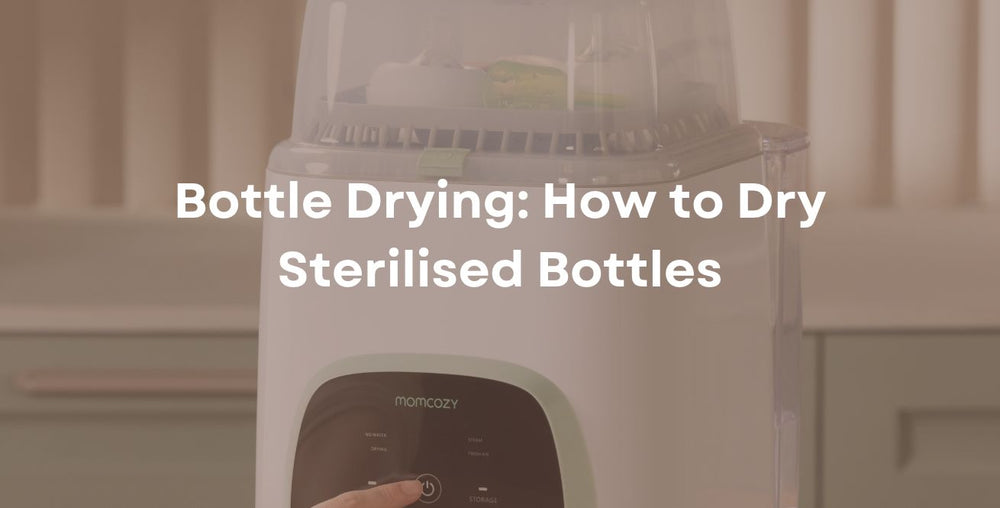
Bottle Drying: How to Dry Sterilised Bottles
Drying is the step most parents skip, and the step that quietly undoes a good sterilise. In Australia's humid climate a damp bottle left on the bench is a warm, wet place for bacteria, so every teat, collar thread and base corner needs to be dry before storage. Air drying on a bottle drying rack costs nothing and suits dry heat; a washer-dryer suits anyone washing four or more bottles a day. Choose by daily bottle count, how humid your kitchen gets and whether you want storage built in. For most Australian households the deciding factor is simply how many bottles hit the sink each day. The Momcozy KleanPal Pro covers all three.
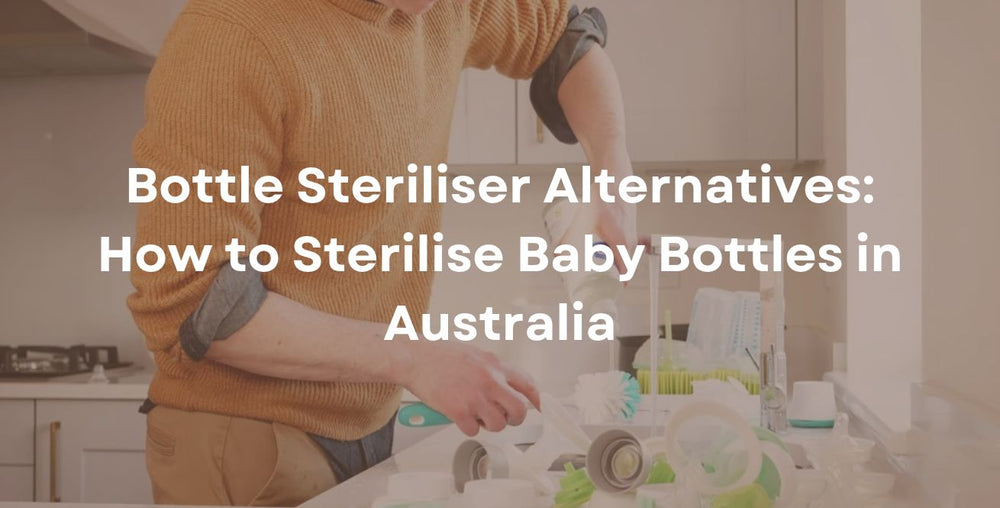
Bottle Steriliser Alternatives: How to Sterilise Baby Bottles in Australia
Yes, you can sterilise baby bottles without a bottle steriliser, and most Australian kitchens already hold what you need. Boiling in a saucepan, a microwave steam container, the hottest dishwasher cycle or a cold water soak all reduce germs once the bottles are properly washed. Australian guidance asks for bottles and teats to be washed and sterilised until your baby is 12 months old, and re-sterilised if they sit unused for 24 hours. The method matters less than the routine: wash every part, dry it completely, store it covered. This guide is written for Australian kitchens, metric measurements and all. If the routine becomes a nightly drain, the Momcozy KleanPal Pro covers all four steps in one cycle.
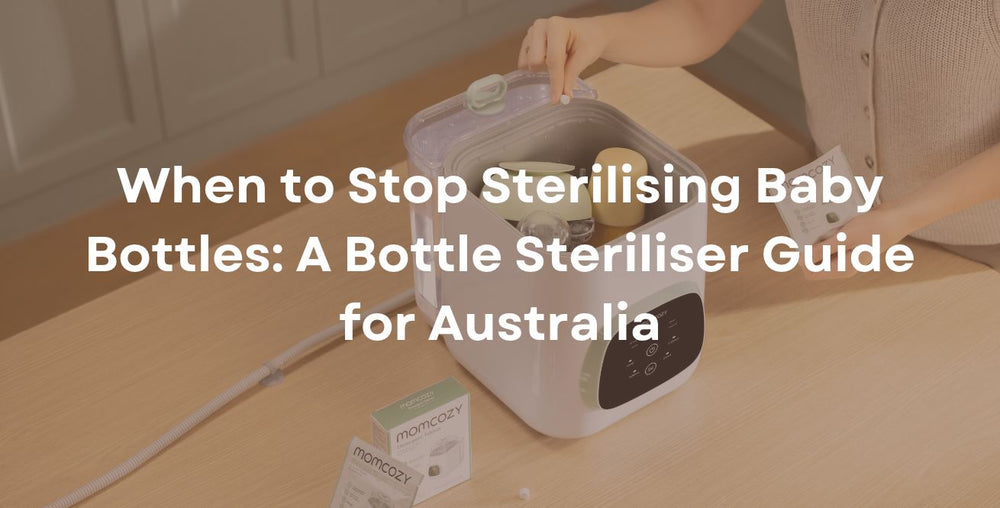
When to Stop Sterilising Baby Bottles: A Bottle Steriliser Guide for Australia
Australian guidance keeps bottles and teats in the sterilising routine until your baby is 12 months old, not three months. Until then, a sterilised bottle left unused for 24 hours has to be done again, and made-up formula that has not been used within a day is tipped out rather than kept. How strictly you hold that line depends on your baby, because prematurity, illness and tank water all add months. A bottle steriliser only earns bench space if it genuinely washes, dries and stores in one load, which is the standard the Momcozy KleanPal Pro is measured against in this guide.
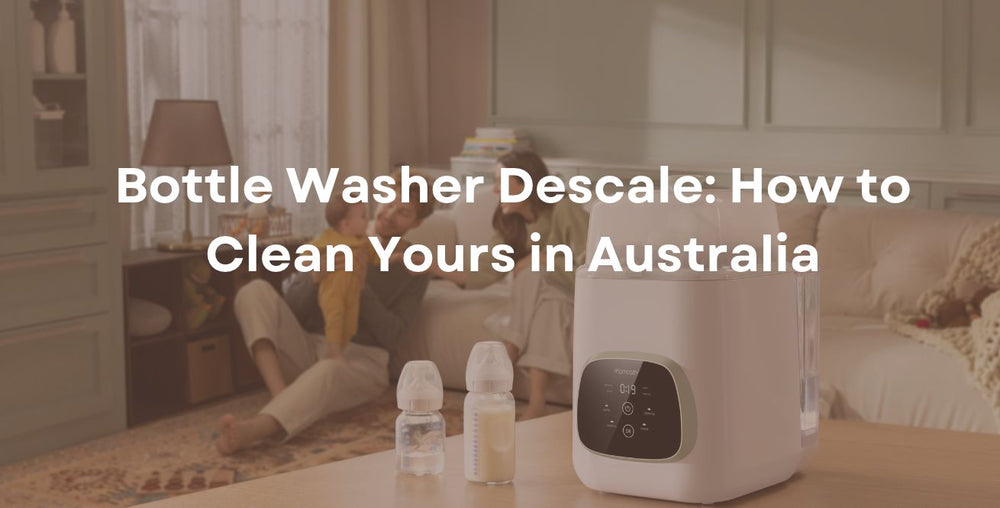
Bottle Washer Descale: How to Clean Yours in Australia
Scale is the quiet reason a bottle washer stops performing. Mineral deposits narrow the jets, leave spots on teats and make every cycle feel weaker, and by the time it is visible the machine has been washing below par for weeks. This guide sets out the 20-cycle descaling routine for Australian households, the signs that point to scale rather than a loading mistake, the difference between descaling and sterilising, and how to choose between filtered water, tablet counts and a shorter interval. It is written for the model Momcozy sells here: the Momcozy KleanPal Pro Baby Bottle Washer and Steriliser.
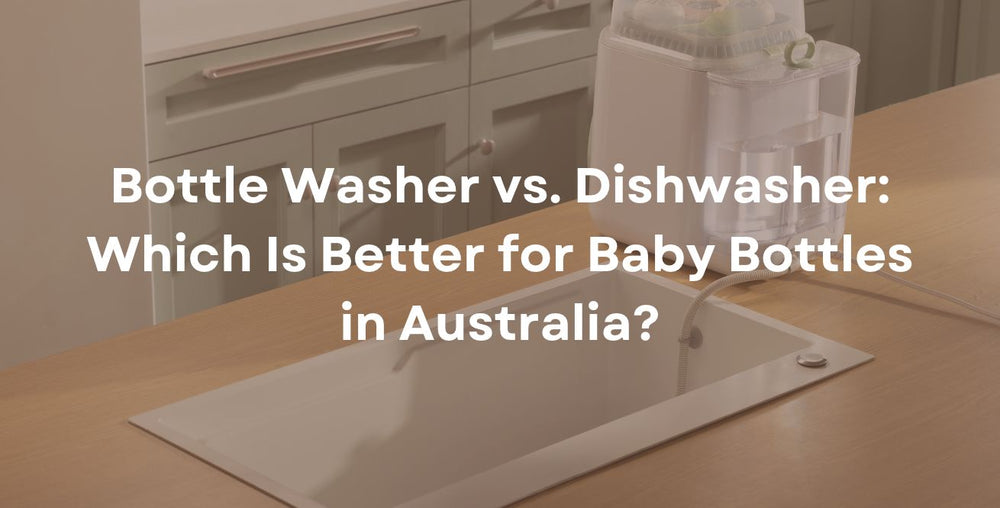
Bottle Washer vs. Dishwasher: Which Is Better for Baby Bottles in Australia?
if you wash four or more bottles a day, a dedicated bottle washer earns its bench space. If you wash one or two, a dishwasher on its hottest cycle plus proper sterilising is genuinely enough. In Australia the deciding factors are humidity, hard tap water that scales heating plates, and how much bench space you actually have. This guide compares both machines on cleaning, sterilising, water use and running costs, using Australian guidance rather than advice written for an American kitchen, and uses the Momcozy KleanPal Pro as the reference point for what a dedicated machine should realistically deliver.
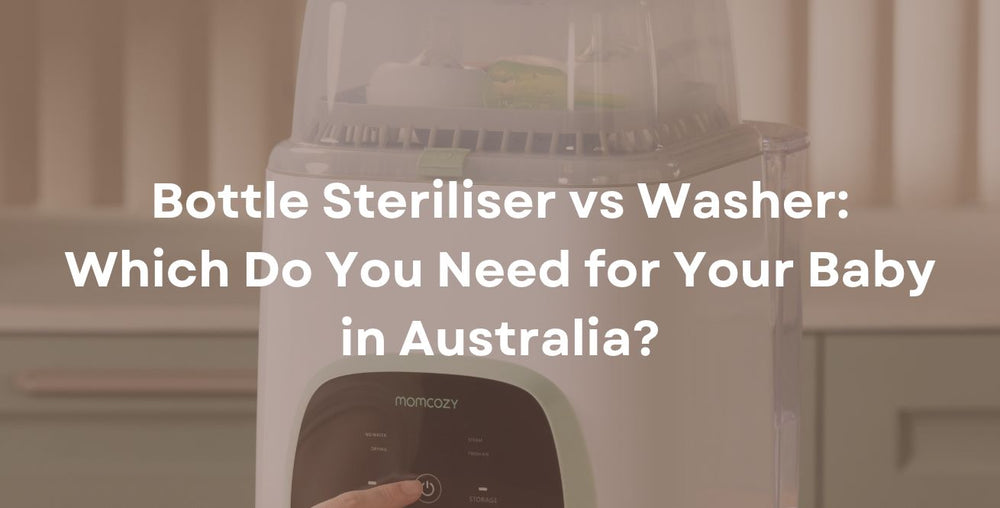
Bottle Steriliser vs Washer: Which Do You Need for Your Baby in Australia?
If you are weighing up a bottle steriliser versus a washer in Australia, the short answer is that they do different jobs, and most families end up using both. A washer removes milk fat and residue; a steriliser applies 100°C steam to whatever is left behind. Australian guidance asks parents to wash and sterilise feeding equipment until their baby is 12 months old, so the real question for most Australian households is how much of that routine you want to hand over to a machine. Families who want one appliance to wash, steam sterilise, dry and store should look at the Momcozy KleanPal Pro.
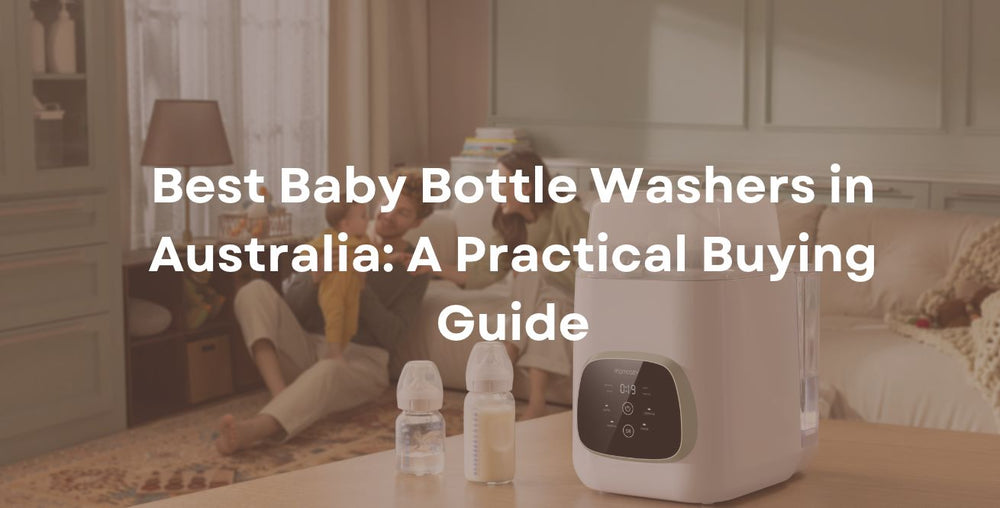
Best Baby Bottle Washers in Australia: A Practical Buying Guide
A bottle washer is not essential baby gear, but for a household washing four or more bottles a day it can hand back most of an hour, every day. Australian health advice asks you to wash and sterilise feeding equipment until your baby is 12 months old, so the workload is daily and long-running, and the machine has to suit an Australian kitchen rather than a showroom. This guide covers the things that genuinely change your routine: capacity, tank size, cycle length, drying, noise at night, descaling in hard water, bench space, price bands and warranty. The Momcozy KleanPal Pro is the reference point throughout.
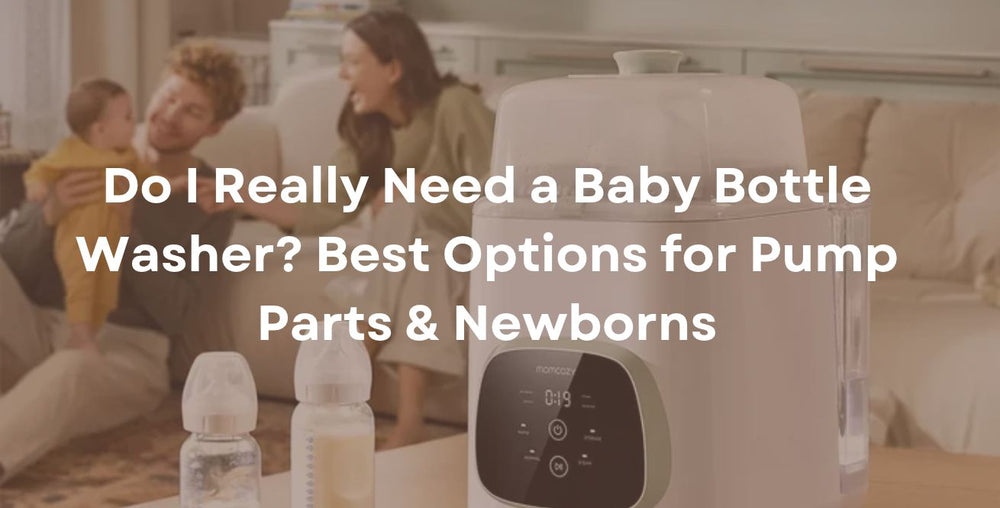
Do I Really Need a Baby Bottle Washer? Best Options for Pump Parts & Newborns
This guide answers one question for Australian parents: is a bottle washer worth buying? It sets out what a bottle washer does that a steriliser and a dishwasher do not, how it fits Australian cleaning and sterilising guidance (wash after every use, sterilise until 12 months, re-sterilise anything left unused for 24 hours), and who genuinely benefits — frequent bottle feeders, pumping parents, and anyone washing for a newborn around the clock. It then lists what to check before spending several hundred dollars, including bench space, capacity, drying and running costs, and it uses the Momcozy KleanPal Pro as the reference model for each of those checks.
Expert Spotlight


Katie Kim
DNP, CPNP, IBCLC

Dr. Kailee Venzin
Pelvic Floor Physical Therapist

Laura Hendrickson
BSN, RN, IBCLC

Johanna Metzger
Physical Therapist

Zola Zhang
MD, IBCLC,Breast Surgeon,Mother

Marianne Ryan
PT,OCS,Author

Jaime Babiera

Shelly Umstot
BSN,RN

Sarah Mallin
MA,BA,BSN,RN,IBCLC

Caitlyn Tivy
PT, DPT, OCS

Abby McCoy

Payton Babb Sy

Joy Windley
BS, CLC
Popular Pregnancy & Postpartum Tools

Baby Name Generator
A name is the first gift to your beloved baby. Find the perfect name for your baby

Pregnancy Weight Gain Calculator
Track your pregnancy weight gain and get personalized recommendations based on your pre-pregnancy BMI.
Chinese Gender Prediction Calculator
Legend has it that this ancient Chinese gender prediction chart was discovered in a royal tomb near Beijing over 700 years ago.
Due Date Calculator
Using our Pregnancy Due Date Calculator, you can estimate your due date based on your last menstrual period, conception date, IVF transfer, or ultrasound.