Breastfeeding conversations often begin with outcomes.
How many mothers initiate breastfeeding? How many continue to six months? How many are still providing breastmilk at 12 months?
These measures are important for understanding breastfeeding at a population level. However, they do not necessarily explain the circumstances behind an individual mother's experience.
At the Australian College of Midwives (ACM) National Conference, registered midwife and infant sleep consultant Bianca Burge raised an important consideration for healthcare professionals: whether the language used when discussing breastfeeding continuation adequately reflects the realities mothers face.
Instead of asking only “why did she stop breastfeeding?”, there may be value in also asking, “what circumstances made continuing more difficult?”
The distinction is important.
It does not remove maternal choice or agency. Rather, it recognises that decisions about breastfeeding are made within a wider context of health, family life, employment, support and practical circumstances.
Starting Breastfeeding and Wanting to Continue Are Not the Same Thing
Australia has a high breastfeeding initiation rate. More than 90% of Australian children have received breastmilk, according to Australian Bureau of Statistics data referenced in Burge's presentation.
Over time, however, the proportion receiving breastmilk changes. Around 37.5% are exclusively breastfed to around six months, while approximately 43% are still receiving breastmilk at 12 months.
These figures describe an important population-level pattern, but they cannot tell us what each mother intended at the beginning of her journey.
One mother may have hoped to breastfeed for six months. Another may have wanted to continue for a year. Another may not have established a particular timeframe.
An earlier-than-expected end therefore does not necessarily mean that the mother's intention changed.
In some cases, the circumstances surrounding breastfeeding may have become increasingly difficult to manage.
This is an important distinction when considering how breastfeeding support is discussed. The outcome is visible in the data. The circumstances behind that outcome are often less visible.

When Circumstances Change
The months following birth can bring significant changes to a family's circumstances.
A mother may return to work. Her partner may return to work. She may begin caring for older children alongside her baby. Sleep patterns may change, financial pressures may emerge, and the practical requirements of expressing breastmilk may become more difficult to accommodate.
The breastfeeding itself may not have changed.
The environment around it may have.
Burge shared the example of a mother with a four-month-old baby who was preparing to return to work. Her concern was not whether she should stop breastfeeding. She wanted to understand how she could continue once she returned to work.
This distinction illustrates why breastfeeding continuation cannot always be considered solely in terms of motivation or knowledge.
A mother may understand the benefits of breastfeeding and remain committed to her goal, while still encountering practical circumstances that make that goal increasingly difficult to sustain.
Research referenced in Burge's presentation also highlights the relationship between returning to work and breastfeeding continuation. Among mothers returning to work before six months, 58% reported that the transition influenced them to reduce or stop breastfeeding. Greater workplace flexibility and opportunities to breastfeed or express were associated with continuation.
These findings point to a broader consideration: supporting breastfeeding continuation involves more than providing information. The environments in which mothers live and work can also influence what is practically possible.
The Language We Use Matters
“Why did you stop breastfeeding?”
On its own, this may seem like a reasonable question.
However, it can unintentionally place the focus on the mother's decision without first considering the circumstances surrounding it.
A different question may open a different conversation:
“What made continuing breastfeeding difficult?”
The answer could involve returning to work, limited opportunities to express, fatigue, family responsibilities, changes in routine or difficulty accessing appropriate support.
It could also be something entirely different.
The purpose is not to assume that every mother who stops breastfeeding was prevented from continuing. Nor is it to suggest that breastfeeding continuation should always be the desired outcome.
Rather, it is to understand the factors influencing an individual mother's experience before drawing conclusions from the outcome.
For healthcare professionals, that distinction is consistent with a woman-centred approach: understanding the individual circumstances, preferences and goals of the woman receiving care.
Rethinking What Breastfeeding Success Means
Clinical recommendations and evidence-based breastfeeding guidance remain important.
At the same time, breastfeeding does not take place in a controlled environment.
Mothers have different health circumstances, family structures, employment situations, resources, preferences and goals. Babies and feeding experiences also differ.
For Burge, woman-centred care means considering these differences rather than assuming that one approach will be appropriate for every mother.
The question therefore becomes:
“What does this mother need to achieve the breastfeeding journey she hopes for?”
For one mother, that may mean exclusively breastfeeding.
For another, it may include expressing breastmilk as she returns to work.
For another, breastfeeding may form part of a broader feeding approach that reflects her circumstances and preferences.
Supporting women does not mean ensuring that every breastfeeding journey reaches the same endpoint. It means ensuring that women have access to appropriate information, professional support and choices that allow them to make informed decisions about their own care and feeding journey.

Looking Beyond the Early Postnatal Period
This also raises an important consideration about when breastfeeding support is provided.
Pregnancy, birth and the early postnatal period naturally receive significant attention. Mothers may require support with attachment, positioning, feeding, milk supply and understanding their newborn's behaviour.
But circumstances do not remain static after those first weeks.
Three or six months later, a mother may be living a very different life. She may have returned to work, taken on additional responsibilities or developed a new family routine.
The questions she needs help with may therefore be different from those she had immediately after birth.
This suggests an opportunity for breastfeeding conversations to look further ahead.
Rather than focusing only on whether breastfeeding has been established, healthcare professionals may also consider what changes are approaching for the mother:
- Is she planning to return to work?
- How might her feeding or expressing routine change?
- What support will be available to her?
- Are there practical challenges she is already anticipating?
- What information or professional support might be useful at that stage?
Anticipating these questions does not mean assuming that difficulties will occur. It means recognising that circumstances can change and giving mothers an opportunity to consider their options before those changes arise.
Practical Support Has a Role, Too
There is no single intervention that can remove every barrier to breastfeeding continuation.
For some mothers, the most important support may be clinical assessment or lactation support. For others, education, reassurance, family support or greater flexibility in the workplace may make a meaningful difference.
Practical products can form another part of this wider support environment.
For Momcozy, which collaborated with Burge around her ACM National Conference presentation, this is where product design has a supporting role.
The consideration is not simply whether a product can perform a particular function, but whether practical design can help mothers manage expressing within the circumstances of their everyday lives.
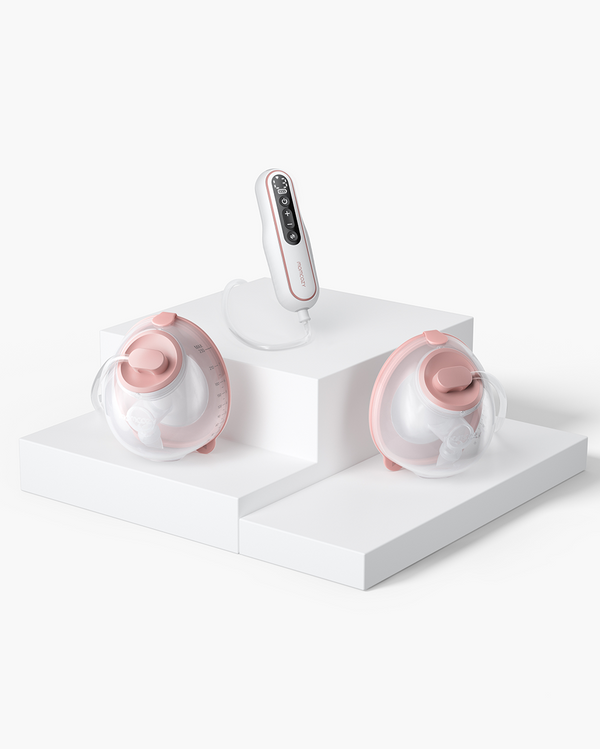
The Momcozy Wellness 1 (W1) Warm-Massage Wearable Breast Pump is one example. Its wearable, hands-free format is designed to provide flexibility while expressing, with adjustable pumping options that allow mothers to adapt their pumping experience to their individual routines and preferences.
W1 is one practical option—not a replacement for breastfeeding education, midwifery care, lactation support or other appropriate healthcare. It should not be understood as guaranteeing a particular clinical or feeding outcome.
Its place is within the broader support environment around a mother: alongside professional care, informed decision-making and the practical arrangements that can influence whether breastfeeding or expressing is manageable within her circumstances.
The Question Behind the Question
Breastfeeding statistics are valuable because they help us understand patterns across populations.
But a statistic cannot tell us what a particular mother intended, what changed in her circumstances or what support she had access to when difficulties arose.
Behind every breastfeeding outcome is a woman navigating her own combination of health, recovery, work, family responsibilities, resources and personal goals.
That is why the question may need to go beyond:
“Why did she stop?”
It may also need to ask:
“What made continuing difficult, and what support might have helped?”
For healthcare professionals, this is not about assigning responsibility for every breastfeeding outcome. It is about understanding the wider circumstances in which those outcomes occur.
And for mothers, it is a reminder that needing to adapt a feeding journey does not mean that their intentions were unimportant.
The more useful conversation may therefore be one that considers not only the outcome, but the woman, her circumstances and the support available to her along the way.
Frequently Asked Questions
What are the breastfeeding recommendations in Australia?
Australia's National Health and Medical Research Council (NHMRC) recommends exclusive breastfeeding until around six months, when appropriate solid foods are introduced. Breastfeeding is encouraged to continue until 12 months and beyond, for as long as the mother and child desire.
These recommendations provide population-level guidance, while individual feeding decisions should take account of the mother and child's circumstances and appropriate professional advice.
Why do some Australian mothers stop breastfeeding earlier than planned?
There is rarely one explanation that applies to every mother.
Returning to paid work, difficulties finding time or an appropriate place to express, fatigue, concerns about milk supply, changing family responsibilities and access to support can all influence a mother's experience.
An earlier-than-planned end to breastfeeding does not necessarily mean that a mother no longer wanted to continue. Understanding the circumstances around the change can provide a more complete picture.
Can breastfeeding continue after returning to work?
Returning to work does not necessarily mean breastfeeding must end.
Depending on individual circumstances, a mother may breastfeed before or after work, express during the working day, breastfeed when her baby is nearby, or use a combination of approaches.
Planning ahead with the workplace and seeking appropriate professional breastfeeding support can help mothers consider the options available to them.
What support may be needed when returning to work?
Practical arrangements can vary considerably between workplaces and individuals.
A mother may need appropriate time and a suitable private space to breastfeed or express, as well as arrangements for storing expressed breastmilk.
Discussing these needs with a workplace before returning can provide an opportunity to establish appropriate arrangements in advance.
Where can Australian mothers seek breastfeeding support?
Mothers can seek support from midwives, lactation consultants and other appropriately qualified healthcare professionals.
The Australian Breastfeeding Association also provides breastfeeding information and support relating to breastfeeding, expressing and returning to work.
When difficulties arise, seeking appropriate support can help a mother understand the factors involved and consider the options available to her.
Does expressing breastmilk mean I am no longer exclusively breastfeeding?
Expressing breastmilk does not, by itself, determine whether a baby is exclusively breastfed. Exclusive breastfeeding relates to what the baby receives rather than whether breastmilk is provided directly from the breast or as expressed breastmilk.
A breast pump can be one practical option for mothers who wish to provide breastmilk when direct breastfeeding is not always possible. The most appropriate approach depends on individual circumstances and, where needed, professional advice.