For many Australian mums, choosing a breast pump can feel overwhelming. Between hospital-grade pumps, wearable pumps, hands-free options, and countless online reviews, it's easy to wonder which solution is actually right for you.
One term that appears frequently during pregnancy and early motherhood is "hospital-grade breast pump." It sounds reassuringly powerful and professional, leading many mothers to assume it must be the best choice for everyone.
But is a hospital-grade breast pump really necessary for every breastfeeding journey?
The answer is more nuanced than many people realise. While hospital-grade pumps can play a vital role in specific situations, advances in breast pump technology mean that many mothers now have access to alternatives that offer both performance and convenience.
Understanding the differences can help you choose a breast pump that supports your individual needs, lifestyle, and breastfeeding goals.
What Is a Hospital-Grade Breast Pump?
A hospital-grade breast pump is a high-performance electric breast pump designed for frequent and long-term use. These pumps are commonly used in hospitals, maternity wards, neonatal intensive care units (NICUs), and breastfeeding support programs.
Hospital-grade pumps are typically designed to:
- Help establish milk supply in the early postpartum period
- Support mothers who need to express milk frequently
- Assist with exclusive pumping
- Maintain milk production when direct breastfeeding is not possible
- Serve multiple users when used with individual collection kits
Because of their durability and performance, hospital-grade pumps are often recommended by healthcare professionals in situations where establishing or maintaining milk supply is especially important.
Hospital-Grade
-300mmHg Suction
15 Suction Levels
3rd-Gen Motor
Why Are Hospital-Grade Pumps Used in Hospitals?
The primary advantage of a hospital-grade breast pump is its ability to deliver strong, consistent suction over extended periods.
During the early weeks after birth, regular and effective milk removal is one of the most important factors influencing long-term milk production. When a baby cannot breastfeed directly, a high-performance pump can help stimulate the breast and support ongoing milk supply.
Healthcare providers may recommend hospital-grade pumps for mothers who:
- Have premature babies
- Have babies receiving care in the NICU
- Experience delayed milk production
- Have difficulty with direct breastfeeding
- Need to establish milk supply quickly
- Are temporarily separated from their baby
In these circumstances, effective milk expression can play a significant role in supporting breastfeeding success.
Is Stronger Always Better?
One common misconception is that the strongest breast pump automatically delivers the best results.
In reality, breastfeeding specialists increasingly recognise that successful pumping depends on several factors, including:
- Comfort
- Correct flange fit
- Frequency of pumping
- Consistency of use
- Suction rhythm and pattern
- Individual breastfeeding needs
A pump that is uncomfortable or difficult to use may discourage regular expression sessions, potentially affecting milk supply over time.
Research into breast pump design has shown that suction patterns that better mimic a baby's natural feeding rhythm can improve pumping efficiency and support a more comfortable experience for mothers.
For many women, the best breast pump is not necessarily the most powerful one. Instead, it is the pump that can be used comfortably and consistently within the realities of everyday life.
Hospital-Grade Breast Pump vs Wearable Breast Pump
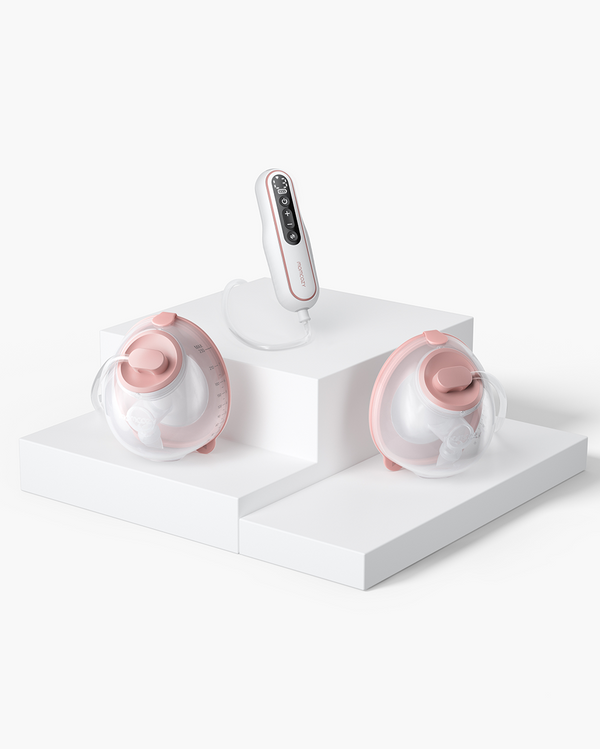
Breast pump technology has evolved significantly in recent years. Modern wearable breast pumps now offer features that were once only associated with larger electric pumps.
Here's how the two categories generally compare:
Hospital-Grade Breast Pumps
Advantages:
- Strong and consistent suction
- Suitable for intensive pumping schedules
- Often recommended for milk supply establishment
- Durable for long-term frequent use
Considerations:
- Larger and heavier
- Usually require access to power
- Less portable
- Can be more difficult to use while multitasking
Modern Wearable Breast Pumps
Advantages:
- Hands-free design
- Greater mobility and flexibility
- Discreet use at home or on the go
- Easier integration into daily routines
- Advanced comfort and fit features
Considerations:
- Performance varies between models
- May not be suitable for every clinical situation
- Not all wearable pumps offer the same suction capability
For mothers balancing breastfeeding with work, household responsibilities, travel, or caring for multiple children, wearable pumps can provide a practical alternative without sacrificing convenience.
Hospital-grade
More Comfort
Whisper-quiet
Portable
Who Actually Needs a Hospital-Grade Breast Pump?
While every mother's situation is unique, hospital-grade breast pumps are often recommended when there is a medical or breastfeeding-related need for intensive pumping support.
You may benefit from a hospital-grade pump if you:
You Have a Premature Baby
Premature infants may not yet have the strength or coordination needed for effective breastfeeding. Pumping becomes an important way to establish and maintain milk supply until direct feeding is possible.
Your Baby Is in the NICU
Mothers with babies in neonatal care often rely on pumping to provide breast milk during periods of separation.
You Have Low Milk Supply Concerns
Some mothers experiencing milk supply challenges may be advised to use a high-performance pump as part of a broader breastfeeding support plan.
You Are Exclusively Pumping
If pumping is your primary method of feeding, a hospital-grade pump may help support long-term milk production.
You Have Twins or Multiples
Meeting the feeding needs of more than one baby often requires more frequent milk expression, making pump performance especially important.
Why Many Australian Mums Are Choosing Wearable Pumps
While hospital-grade pumps continue to serve an important role, many mothers do not require clinical-level pumping support.
Today's parents are often looking for solutions that fit around work, family responsibilities, and busy schedules.
This shift has contributed to the growing popularity of wearable breast pumps.
Modern wearable pumps combine:
- Powerful suction performance
- Hands-free convenience
- Quiet operation
- Portable designs
- Closed-system hygiene protection
- Greater flexibility throughout the day
Rather than requiring mothers to stop what they are doing to pump, wearable technology allows pumping to fit more naturally into daily life.
For many women, this flexibility helps make breastfeeding more sustainable over the long term.
The Bigger Picture: Breastfeeding Support in Australia
Australia continues to promote breastfeeding as the preferred method of infant feeding, and most mothers begin their breastfeeding journey with the intention of continuing for as long as possible.
However, many women stop earlier than they originally planned.
Often, this is not due to a lack of commitment. Instead, practical challenges such as returning to work, managing household responsibilities, sleep deprivation, and maintaining milk supply can make breastfeeding difficult to sustain.
This is why access to appropriate breastfeeding support matters.
Whether that support comes from healthcare professionals, lactation consultants, family members, or the right breast pump, the goal remains the same: helping mothers continue feeding their babies in a way that works for them.
Choosing the Right Breast Pump for Your Needs
The best breast pump is not necessarily the most expensive or the most powerful. It is the one that aligns with your personal circumstances and breastfeeding goals.
If you have a premature baby, are exclusively pumping, or need specialised support, a hospital-grade breast pump may be the most suitable option.
If you are looking for flexibility, mobility, and convenience while maintaining effective milk expression, a modern wearable breast pump may better fit your lifestyle.
Ultimately, breastfeeding success is not defined by the type of pump you choose. It is supported by having the right tools, the right information, and the right support system around you.
Because every breastfeeding journey is different, and every mother deserves a solution that works for her.