Bringing your baby home is exciting, emotional and, for many new parents, a little overwhelming.
Suddenly, even the smallest things can raise questions. Is my baby feeding enough? Why do they want to feed again so soon? Is cluster feeding normal? Should breastfeeding feel like this?
If you’ve found yourself wondering the same things, you’re certainly not alone. For all new parents, the first weeks is less about finding the perfect routine and more about learning to understand a completely new person.
While breastfeeding is a natural way to nourish a baby, it doesn’t always feel straightforward from the beginning. Mother and baby are both adjusting, and establishing breastfeeding, recognising feeding cues, understanding milk supply and finding a rhythm that works for your family can all take time.
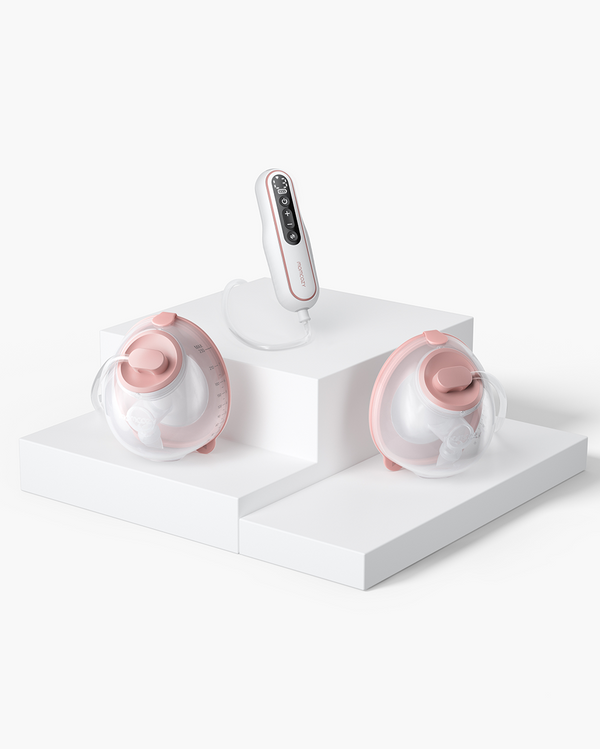
Every breastfeeding journey can also look different. While some mothers prefer to primarily breastfeed directly, others may choose to express breast milk as part of their feeding routine. For mothers who choose to express breast milk, Momcozy’s wearable breast pumps are designed to provide more flexibility throughout different stages of the breastfeeding journey, whether they are expressing occasionally or incorporating pumping more regularly into everyday life. Understanding how much breast milk is normal to pump can also help parents feel more confident when introducing pumping into their feeding routine.
Having access to reliable information, appropriate professional support and the right breastfeeding and feeding essentials can make those early weeks easier to navigate.
As part of Breathe & Breastfeed, Momcozy’s breastfeeding support initiative centred around “Support for Every Latch, Letdown and Little Win,” Registered Nurse Tracy Li shares practical perspectives to help Australian parents feel better informed as they navigate their baby’s first weeks.
Tracy is a Registered Nurse and Clinical Specialist at the University of Sydney, with experience spanning hospital, general practice and academic settings. Her background includes delivering immunisations and patient education in general practice, teaching within the nursing faculty at the University of Sydney, and previous nursing experience at Northbridge Medical Centre and Westmead Rehabilitation Hospital.
In Australia, Momcozy is also supporting the Royal Children’s Hospital Foundation through the initiative, extending its commitment to supporting children and families during the important early stages of parenthood.
What Do All Nurses Want Every New Parent to Know?
The first few weeks with a newborn have a funny way of making you question everything.
They’ve just eaten. Why are they hungry again?
They’ve been asleep for what feels like forever. Should you wake them?
Their hands are clenched. They’re turning their heads. They’re suddenly crying. What are they trying to tell you?
And somewhere between feeding, changing nappies and trying to remember when you last slept, there’s often another question running quietly in the background: “Am I doing this right?”
For Tracy Li, Registered Nurse and Clinical Specialist at the University of Sydney — and a first-time mum herself — there’s one thing she wants new parents to hear early.
“For the first few weeks, there’s no perfect routine. You simply respond to your baby. You’re learning from each other, and that takes time.”
Tracy has worked across hospital, general practice and academic settings, including patient education and nursing teaching at the University of Sydney, with previous nursing experience at Northbridge Medical Centre and Westmead Rehabilitation Hospital.
As part of Momcozy’s Breathe & Breastfeed initiative in Australia, she shares some of the practical things that can make those first weeks feel a little easier to understand.
And it starts by forgetting about perfection.
Does Your Newborn Need a Schedule?
Newborns can be wonderfully unpredictable.
They can sleep for much of the day, wake for relatively short periods and suddenly decide that the routine that appeared to work yesterday is no longer of any interest today.
That doesn’t automatically mean something is wrong.
“There’s no perfect routine for the first few days,” Tracy says, “but there are some rhythms you can rely on.”
One she introduces to parents is a simple Feed-Wake-Sleep rhythm.
The idea isn't about watching the clock. It’s about responding to what your baby is showing you: feeding when they're ready, spending some time together while they're awake and helping them settle before they become overtired.
And if your newborn isn't sleeping through the night?
Tracy has some reassuringly straightforward advice:
“Trust me, it’s not realistic at this stage.”
In other words, the goal of these first weeks isn't to somehow crack the newborn sleep code. It’s to gradually get to know the tiny person who has just arrived.
How Can you Tell Your Newborn is Hungry Before the Cry?
Your baby can't tell you, “I'm getting hungry.”
But they have other ways of saying it.
And learning that language can change how those early feeds feel.
“Although your baby doesn’t talk to you at this stage, they still communicate with you every day,” Tracy explains. “As a parent, one of the most empowering things is learning to read your baby’s cues.”
One of those cues is rooting.
You might notice your baby turning their head from side to side, opening their mouth or bringing their fingers towards their mouth.
That’s often the moment to pay attention.
“This is actually an early sign of hunger. This is the best time to feed the baby.”
Crying tends to come later.
By then, your baby may be more agitated, and behaviours such as baby squirming while breastfeeding can make feeding more difficult. Tracy suggests calming them first through skin-to-skin contact, cuddling or gentle rocking before offering the feed again.
You won't recognise every cue immediately.
That's part of the process.
“Every baby communicates differently, and you get to know your baby better every day.”
How Often Should a Newborn Be Fed?
One thing that can surprise new parents is how frequently newborns feed.
Breastfed newborns commonly feed around 8 to 12 times over 24 hours, and those feeds won't necessarily arrive in neat three-hour intervals.
Sometimes several feeds happen close together — often called cluster feeding.
It can leave mothers wondering whether they are producing enough milk, particularly in the first few days when they are producing colostrum. Many breastfeeding parents also have questions about milk supply, including how long breasts take to refill after pumping and what changes are normal throughout the day.
Colostrum comes in relatively small amounts, but newborn stomachs are also small.
As Tracy puts it:
“Feeding a small amount to a newborn can be completely right because their stomach is so small.”
Rather than judging breastfeeding by one feed, it can be more useful to consider the overall picture — including your baby's wet nappies, weight gain and behaviour during and after feeds.
If you’re worried about milk supply, attachment, weight gain or how effectively your baby is feeding, that’s a good time to speak with your midwife, maternal and child health nurse, GP or an International Board Certified Lactation Consultant (IBCLC).
What Are the Cues That Your Baby Has Had Enough Milk?
We spend a lot of time talking about hunger cues.
Fullness cues matter as well.
After a satisfying feed, you may notice your baby's entire body begin to change.
“When babies have had a full feed, they’ll be happy and relaxed,” Tracy explains. “They may release the nipple or bottle teat, turn their head away and not re-engage.”
Even their hands can offer a clue.
A baby who began the feed with tightly clenched fists may gradually open and relax their hands. Their body and muscle tone may appear more relaxed too.
Those little observations can help parents become more confident in reading their baby.
They aren't a replacement for monitoring things such as appropriate weight gain and nappy output, but they're another part of the conversation happening between you and your newborn.
And that conversation gets easier to understand with time.
Is Breastfeeding Supposed to Hurt?
Some nipple sensitivity can happen as mother and baby adjust during the early days. Persistent or significant pain is different.
If your nipples are cracked or bleeding, feeding continues to hurt or something simply doesn't feel right, don't assume that discomfort is something you have to tolerate to breastfeed successfully.
Attachment and positioning may need attention, or there may be another reason for the pain.
Getting appropriate breastfeeding support can help identify what's happening rather than leaving you to guess.
That idea — don't sit with a concern simply because you think you should already know the answer — comes up repeatedly in Tracy's advice.
“If you have any concerns, don’t hesitate to reach out for help. You can go to your GP, a midwife or a family and child health nurse.”
Sometimes you'll be told that what you're seeing is completely normal.
Sometimes you'll need more support.
Both are good reasons for asking.
What Breastfeeding and Newborn Resources Are Available to Australian Parents?
For parents in New South Wales, there's also one resource Tracy specifically recommends keeping close: your baby's Personal Health Record, commonly known as the Blue Book.
Families receive it after their baby's birth, and it becomes a useful record and resource as their child grows.
“You’ll find so many useful resources and websites in this book,” Tracy says. “Don’t forget to bring the book with you when you do the regular check-up for your baby.”
It may not seem particularly exciting when you're surrounded by all the other things a newborn suddenly requires, but keep it somewhere you can find it.
You'll be using it again.
When Should You Ask for Breastfeeding Support?
The first few weeks can make even small decisions feel enormous.
Should I offer another feed?
Are they tired or hungry?
Is this normal?
Do I need to call someone?
Part of becoming more confident isn't reaching a point where you never have questions. It's gradually understanding your baby better — and recognising when you need someone else's expertise.
This is also part of the thinking behind Momcozy's Breathe & Breastfeed initiative and its message, “Support for Every Latch, Letdown and Little Win.”
Breastfeeding isn't one big moment when everything suddenly clicks.
It can be the first time you recognise your baby's rooting.
The feed that finally feels a little easier.
Realising that those tiny relaxed hands mean they've probably had enough.
Expressing milk when direct feeding isn't possible.
Calling a professional because something doesn't feel right.
Or simply making it through a particularly unpredictable day.
In Australia, Momcozy is also supporting the Royal Children’s Hospital Foundation as part of Breathe & Breastfeed, extending the initiative's focus on supporting children and families beyond breastfeeding alone.
Because support shouldn't disappear once a mother leaves the hospital.
Her needs will continue to change.
She may eventually begin expressing breastmilk, navigate changes in feeding patterns, prepare to return to work or find that something that worked beautifully last month suddenly doesn't anymore.
That's motherhood.
And perhaps one of the more useful things to remember during those first few weeks is something Tracy tells parents herself:
“Trust yourself and trust the baby. Don’t push yourself too hard.”
Your baby is learning you.
You're learning them.
Neither of you is expected to have mastered it yet.
“You’re learning from each other, and that takes time. So be kind to yourself.”
A Few Questions You Might Still Have
How often should my newborn breastfeed?
Breastfed newborns commonly feed around 8 to 12 times in 24 hours, although individual feeding patterns vary. There may also be periods when your baby wants several feeds relatively close together.
How can I tell my baby is hungry before they cry?
Look for early feeding cues such as rooting, turning their head with their mouth open, bringing their hands towards their mouth or sucking their fingers. Crying is generally a later hunger cue.
How do I know when my baby has had enough?
Your baby may release the breast or bottle teat, turn their head away, stop re-engaging and appear more relaxed. Their tightly clenched hands may also begin to open. Appropriate wet nappies and weight gain remain important indicators of adequate intake.
Is cluster feeding normal?
It can be. Newborns may want several feeds close together. However, if you're worried about your baby's milk intake, weight gain or general wellbeing, speak with an appropriate healthcare professional.
What if breastfeeding hurts?
Some sensitivity can occur initially, but persistent or significant pain, cracked or bleeding nipples or pain that isn't improving should be discussed with a healthcare professional or qualified breastfeeding specialist.
When should I ask for help?
Whenever you're concerned. As Tracy says, you can reach out to your GP, midwife or family and child health nurse. An IBCLC can also provide specialised breastfeeding support.
When might I need a breast pump?
Some mothers choose to express breast milk at different stages of their breastfeeding journey. This might be for greater feeding flexibility, time away from their baby, sharing feeding responsibilities or preparing to return to work. Wearable breast pumps and other breastfeeding essentials can provide additional options for mothers who choose to express. Some parents may also explore different pump options depending on their circumstances, including whether hospital-grade breast pumps may be suitable for their needs.
Warm-Massage
Milk Boost Mode
Reliable Battery
Transparent Top
Ultra-slim
Wireless Charging
Effortless Alignment
Smart App Control
Where can I find breastfeeding support in Australia?
Depending on where you live and your individual needs, breastfeeding support may be available through your midwife, maternal and child health nurse, GP or an International Board Certified Lactation Consultant (IBCLC). If you have concerns about breastfeeding, milk supply, pain, attachment, your baby’s weight gain or general wellbeing, seek appropriate professional advice.